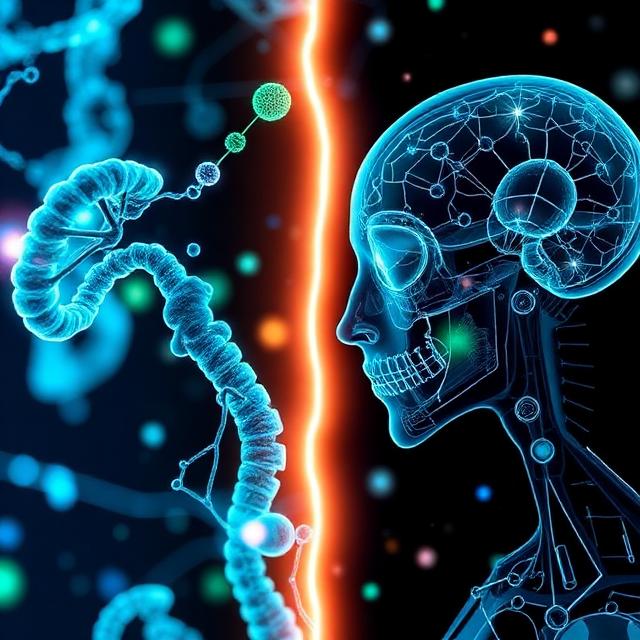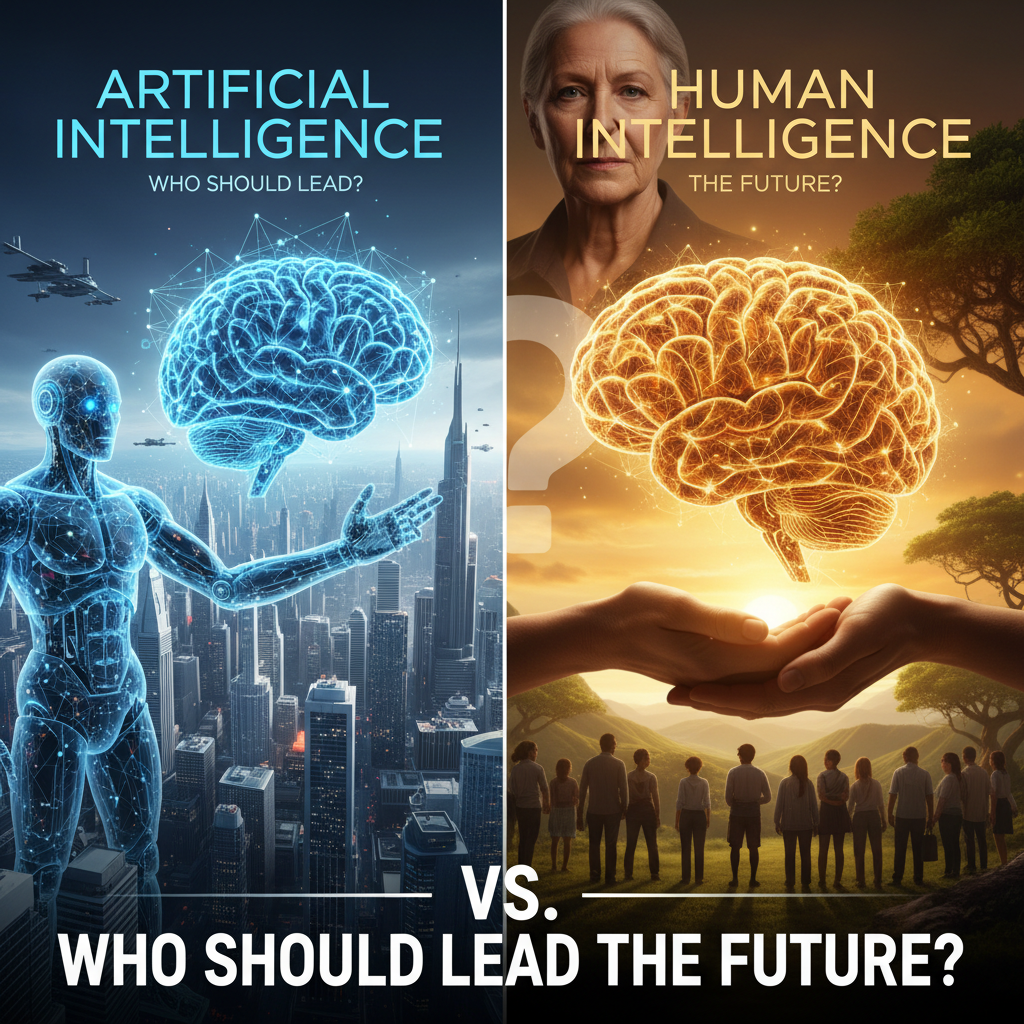
The rapid rise of artificial intelligence has reignited one of the most fascinating debates in science, technology, and the future of society: should AI remain a tool guided by humans, or are we slowly entering an era where machine intelligence begins to rival—or even surpass—our own decision-making power?
Artificial Intelligence is no longer confined to research labs or science fiction. It writes text, generates images, diagnoses diseases, predicts financial markets, optimizes logistics, drives vehicles, and assists in scientific discovery. In many narrow tasks, AI systems already outperform humans in speed, accuracy, and scale. They process vast amounts of data in seconds, detect patterns invisible to the human eye, and operate continuously without fatigue. For industries focused on efficiency and performance, AI represents a technological leap comparable to electricity or the internet.
At the same time, human intelligence remains uniquely complex. It is shaped not only by logic and pattern recognition but by emotion, ethics, cultural context, creativity, and lived experience. Humans do not merely calculate; they interpret meaning. We navigate ambiguity, make moral judgments, and adapt to unpredictable social environments. While AI can simulate conversation and creativity, questions remain about whether it truly “understands” anything or simply predicts outcomes based on data patterns.
The debate intensifies as AI systems become more autonomous. Should machines make medical triage decisions? Should algorithms determine loan approvals, job screening, or criminal risk assessments? Can AI-generated scientific hypotheses accelerate discovery beyond human capability? Or does delegating too much authority to machines risk eroding human agency, accountability, and even skill?
There are also economic and societal implications. Automation powered by AI could eliminate certain jobs while creating entirely new ones. Some see this as progress—freeing humans from repetitive labor and enabling focus on higher-level thinking. Others fear widening inequality, technological dependency, and a concentration of power in the hands of those who control advanced AI systems.
Importantly, this is not a simple battle between humans and machines. AI is built by humans, trained on human-generated data, and deployed within human systems. Yet the more capable these systems become, the more society must decide where to draw boundaries. Should AI primarily assist and augment human intelligence, or should it eventually take the lead in domains where it performs better?
The “Artificial Intelligence vs Human Intelligence” debate is not about choosing one and discarding the other. It is about defining roles, limits, and responsibilities in a future where both forms of intelligence increasingly interact. Below, we explore the core arguments on each side