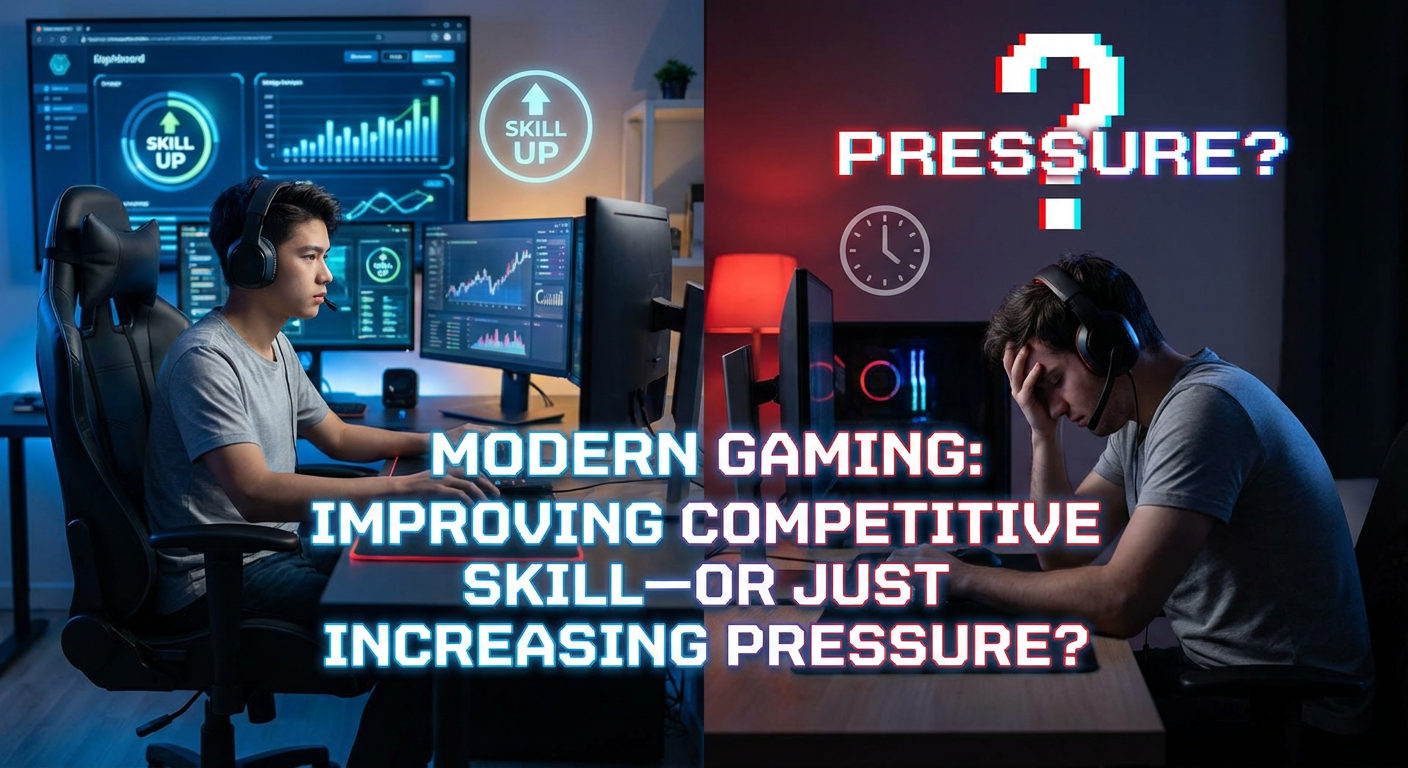
Gaming and esports have evolved at an incredible pace. What started as a casual hobby for many has grown into a global industry with professional teams, massive tournaments, sponsorships, and millions of viewers. Today, competitive gaming is no longer just about having fun after school or work—it’s about rankings, stats, metas, grind culture, and constant improvement. But this evolution raises an important question: is modern gaming actually helping players develop skill, or is it creating more pressure than enjoyment?
On one hand, there’s no doubt that competitive gaming has reached an impressive level of depth. Games like League of Legends, Valorant, CS2, Dota 2, and Rocket League demand strategic thinking, mechanical precision, teamwork, communication, and fast decision-making. Players today have access to tools that didn’t exist before: replays, analytics, coaching videos, aim trainers, and detailed patch notes. From a pure performance standpoint, the average player is far more skilled than players from a decade ago.
However, with this rise in skill has come an intense pressure to perform. Ranked modes dominate how many people experience games. Losses feel personal. A bad match can ruin an entire session. Instead of experimenting or playing creatively, many players feel forced to follow the meta or risk being flamed by teammates. The question becomes: are we playing to improve—or playing to avoid blame?
Esports culture also shapes expectations in subtle ways. Watching professionals can be inspiring, but it can also be discouraging. When highlight clips and perfect plays flood social media, it’s easy to forget that pros train for 8–12 hours a day with full team support. Casual and semi-competitive players often compare themselves to unrealistic standards, leading to frustration, burnout, or even toxicity.
Another aspect worth discussing is how gaming has shifted socially. Online multiplayer connects people across the world, but it can also reduce patience and empathy. Anonymity makes it easier to criticize teammates harshly. Many players talk about how gaming feels more stressful than relaxing, even though games are supposed to be entertainment. If logging in feels like a test instead of a break, something may be off.
That said, competitive gaming isn’t inherently negative. For many players, the grind is exactly what makes games rewarding. Improving rank, mastering mechanics, and winning tough matches can build confidence and discipline. Esports has also created real career paths—not just for players, but for coaches, analysts, casters, and content creators. The issue isn’t competition itself, but balance.
Maybe the real challenge for modern gaming is redefining success. Is success only about rank and win rate, or can it include enjoyment, learning, and good sportsmanship? Can players take competition seriously without letting it damage their mental health? Can developers design systems that reward improvement without punishing experimentation?
I’m curious to hear other opinions. Do you feel modern gaming is more stressful than it used to be? Has ranked play improved your skills—or reduced your enjoyment? And where do you personally draw the line between competitive ambition and having fun? Let’s discuss.