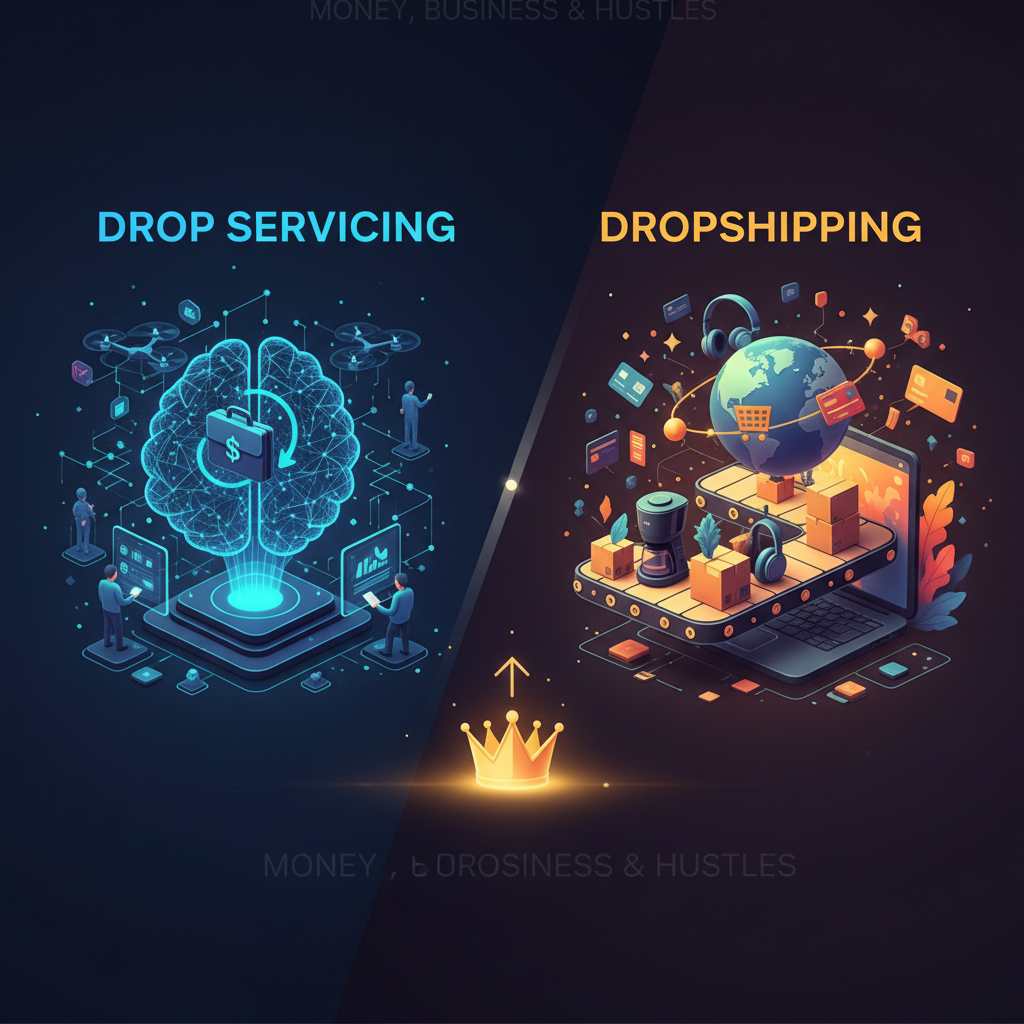
In the modern digital gold rush, the dream of building a location-independent business has never been more accessible. A laptop, a payment processor, and an internet connection are often enough to get started. However, as the barrier to entry lowers, the complexity of choosing the right path increases. Opportunity is everywhere—but so is noise, competition, and misinformation. For those looking to capitalize on the “middleman” business model—where you act as the bridge between a provider and a customer—two titans dominate the conversation: Dropshipping and Drop Servicing. While they share a similar linguistic root, they operate in entirely different dimensions of commerce, psychology, and risk.
Dropshipping is the veteran of the e-commerce world. It involves selling physical products through an online storefront without ever holding inventory. When a customer makes a purchase, you buy the item from a third-party supplier who ships it directly to the customer. On the surface, it sounds simple: find a trending product, build a store, run ads, and collect the margin. But in reality, it’s a game of logistics, high-volume marketing, customer acquisition costs, refund rates, and razor-thin margins. Success often depends on mastering paid advertising platforms, understanding consumer behavior, testing creatives rapidly, and navigating supplier reliability. One viral product can generate impressive short-term revenue—but sustainability requires constant adaptation in an intensely competitive market.
On the other hand, Drop Servicing is the newer, more sophisticated sibling. Often referred to as “service arbitrage,” it involves selling professional services—such as graphic design, web development, SEO, copywriting, or video editing—and outsourcing the actual work to expert freelancers. Instead of dealing with physical shipping delays, damaged goods, customs issues, or global supply chain crises, you are managing human talent and client expectations. The product here is intangible, which changes everything. Quality control becomes subjective. Communication becomes critical. Reputation becomes currency. Rather than optimizing conversion rates on impulse purchases, you are building trust and long-term client relationships.
Both models promise low startup costs because you don’t “buy” the product or service until you’ve already been paid by the client. That cash-flow advantage is attractive, especially for beginners. Yet the skill sets required to master them are vastly different. One demands expertise in performance marketing, trend spotting, and operational efficiency. The other requires high-level sales communication, negotiation, branding, and project management. Dropshipping is often volume-driven and transactional. Drop servicing is often relationship-driven and reputation-based.
As we move further into a subscription-based and service-heavy economy, the choice between selling “things” versus selling “skills” has become the ultimate crossroads for aspiring entrepreneurs. Are you more comfortable optimizing ad campaigns and tracking shipments—or pitching value, managing creatives, and delivering customized results? In this guide, we’ll break down the mechanics, the profitability potential, the scalability, and yes—the headaches—associated with both models, helping you decide which hustle truly aligns with your strengths, risk tolerance, and long-term financial goals