The age-old debate between the 'Early Bird' and the 'Night Owl' is more than just a matter of when you set your alarm; it is a fundamental exploration of human chronobiology and lifestyle design. For decades, society has leaned heavily toward rewarding the early riser. The '5 AM Club' mentality suggests that success is reserved for those who conquer the dawn, fueled by the idea that tranquility and discipline are found in the morning mist. However, modern research into circadian rhythms suggests that our internal clocks are largely genetic. Being a morning person or a night person isn't just a habit—it’s often hardwired into our DNA through a phenomenon known as our 'chronotype.' This biological predisposition dictates when we feel most alert, when our body temperature peaks, and when our cognitive functions are at their sharpest. As our work environments shift toward flexibility and remote setups, the stigma against the late-night worker is slowly dissolving. We are beginning to realize that peak performance isn't about the specific hour on the clock, but about the alignment of our tasks with our natural energy cycles. This comparison dives deep into the two primary chronotypes to understand how they influence our mental health, social lives, and professional output. While the Early Bird might find peace in a silent kitchen and a head start on the day’s emails, the Night Owl often finds their creative spark in the solitude of the midnight hour, when the world's 'noise' has finally died down. Proponents of the morning lifestyle cite improved mood regulation and a better 'fit' with traditional social structures like school and office hours. Conversely, defenders of the nocturnal life point to a unique kind of 'nocturnal bursts' of creativity and a perceived ability to work without the interruptions that plague a standard 9-to-5 day. In this lifestyle showdown, we aren't just looking for a winner; we are looking to see which schedule maximizes human potential. Is it better to rise with the sun and move in harmony with nature, or to reclaim the night as a private sanctuary for deep work? By examining the psychological benefits, social implications, and physiological realities of both sides, we can better understand how to structure our own lives for maximum fulfillment and personal growth, regardless of when we choose to sleep.
Early Birds vs. Night Owls: The Ultimate Battle for Productivity and Well-being
by frisob · February 13, 2026
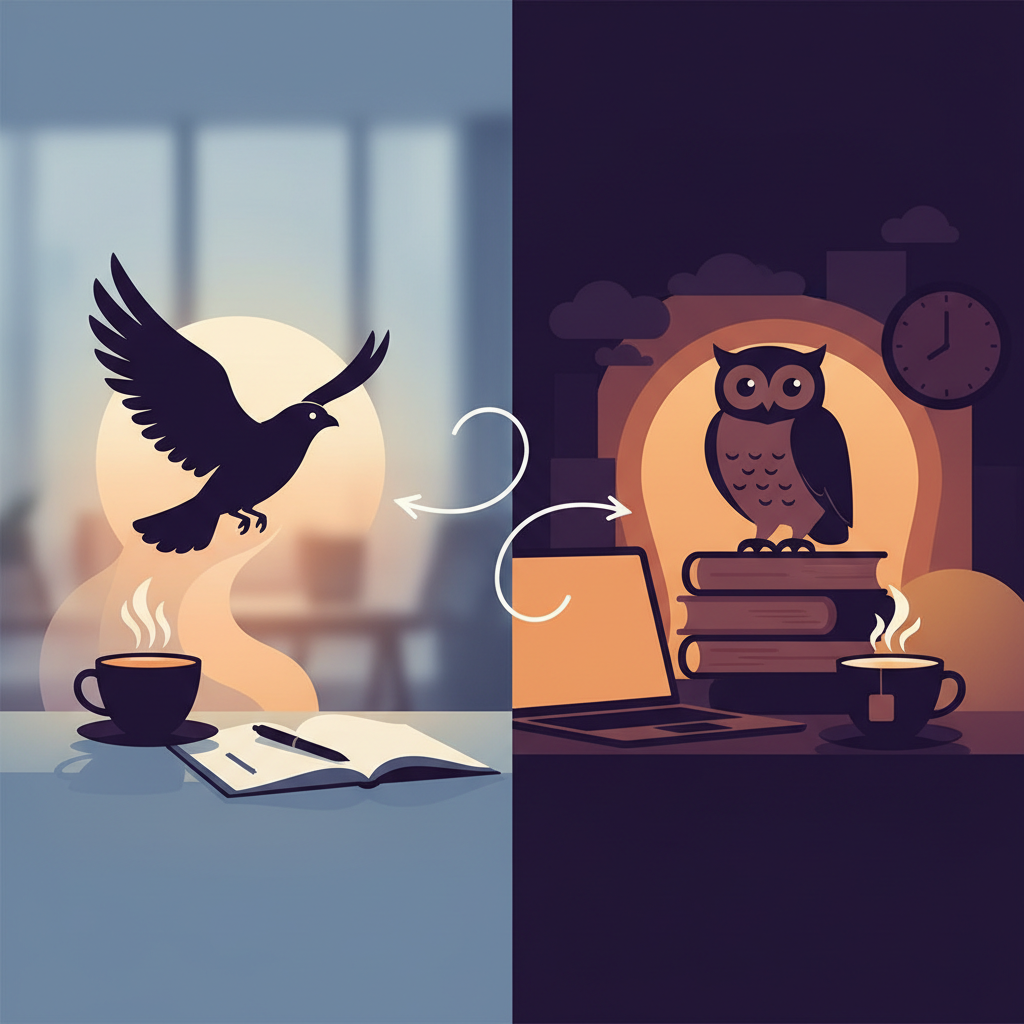
The Early Bird: The Morning Powerhouse
Success in the morning is often attributed to the lack of decision fatigue; by starting early, you tackle your most difficult tasks before the world begins demanding your attention. Early birds tend to have more stable moods and higher levels of 'morningness,' which are statistically correlated with lower risks of depression. They benefit from a natural synchronization with the sun, leading to better Vitamin D exposure and a more regulated sleep-wake cycle. Furthermore, the world is structurally built for morning people—banks, schools, and corporate offices align with this schedule, meaning early birds face less 'social jetlag' than their nocturnal counterparts. This alignment leads to lower stress levels as they are rarely 'racing' to catch up with the rest of society.
The Night Owl: The Creative Visionary
Night owls often display a trait known as 'evening strength,' where their physical and mental performance actually peaks in the late hours of the day, contrary to the steady decline felt by morning people. Studies have suggested that night owls may possess higher levels of divergent thinking, often referred to as 'outside the box' creativity. The silence of the night provides a unique psychological space free from the pings of Slack notifications and domestic interruptions, allowing for deep 'flow states.' Additionally, while early birds are known for persistence, night owls often demonstrate a higher degree of mental flexibility and can remain alert for longer durations after waking compared to early risers.
Total votes: 0
Change your mind? Just click the other side's vote button.
Comments
-
How to Plan a Memorable Weekend Trip on a Tight Budget
Howto · July 21, 2026 -
Which everyday convenience would be hardest to give up for a full year?
Poll · July 21, 2026 -
What single quality makes a neighborhood truly feel like home?
Poll · July 21, 2026 -
 Minimalism vs Maximalism: Lifestyle Choices in 2026
Review · February 14, 2026
