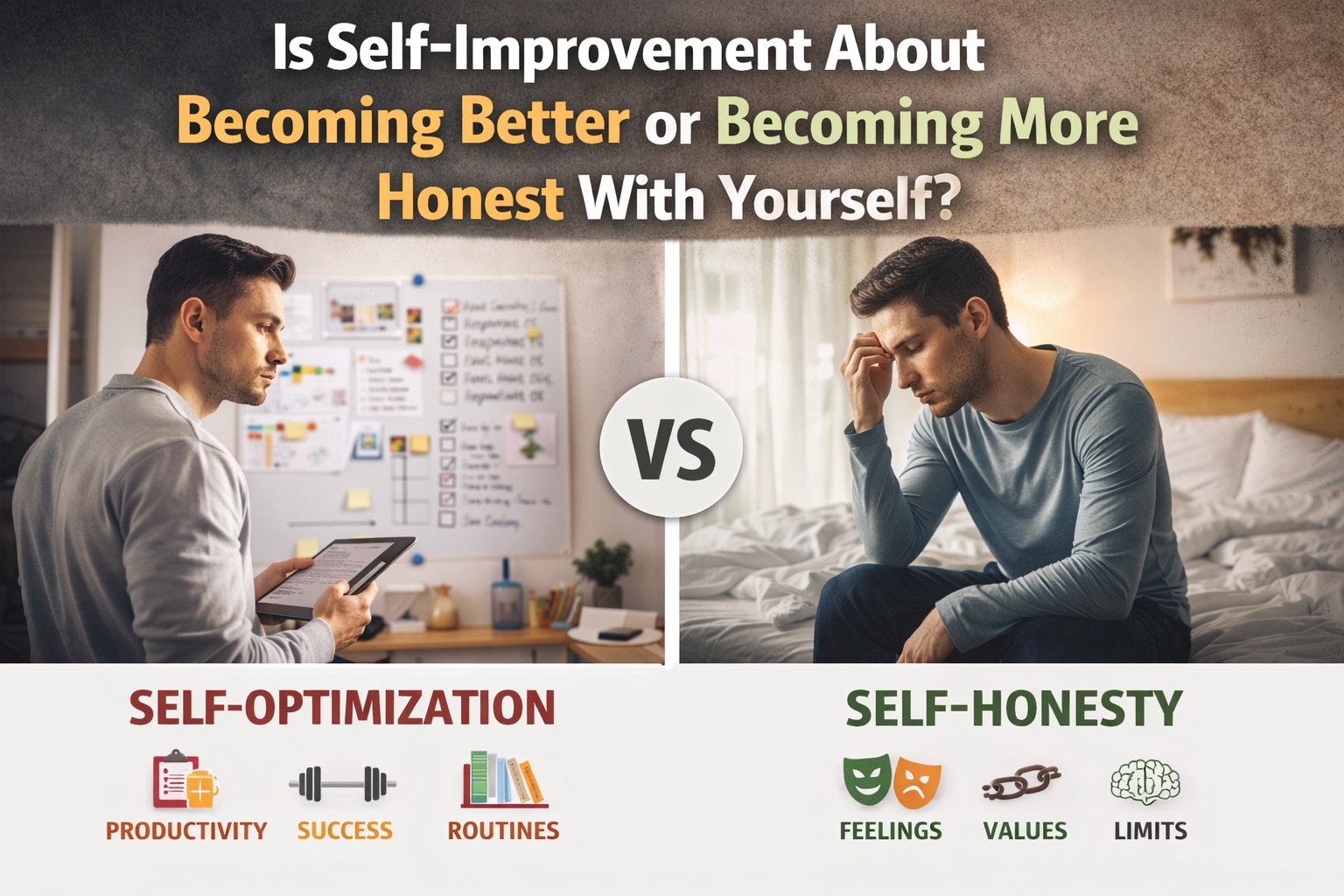
Lifestyle and self-improvement have become some of the most talked-about topics online. Everywhere you look, there are routines promising productivity, habits that guarantee success, and influencers sharing “life-changing” morning schedules. On the surface, it all sounds motivating. But beneath the surface, an important question often gets ignored: is self-improvement really about constantly becoming better, or is it about becoming more honest with who we already are?
For many people, self-improvement starts from dissatisfaction. We want to be fitter, more disciplined, wealthier, calmer, or more confident. Wanting to grow is healthy. The problem begins when improvement turns into pressure—when life becomes a checklist of habits to optimize instead of something to actually live. Waking up at 5 a.m., reading 50 books a year, meditating daily, exercising intensely, building side hustles… none of these are bad on their own. But copied blindly, they can create guilt instead of growth.
Lifestyle change is deeply personal. What improves one person’s life may overwhelm another. A parent working two jobs does not have the same capacity as a student or a remote worker. Yet, online advice often ignores context. We compare our behind-the-scenes with someone else’s highlight reel and conclude that we’re failing at self-improvement, when in reality we might already be doing our best.
Another overlooked aspect is that self-improvement isn’t linear. There are seasons of progress and seasons of pause. Sometimes improving your life means pushing forward—learning new skills, setting goals, and building structure. Other times, improvement looks like rest, saying no, or even letting go of goals that no longer fit who you are. But because “doing more” is celebrated more than “doing enough,” many people feel stuck in constant self-correction mode.
Lifestyle change also isn’t just about habits—it’s about identity. Sustainable improvement happens when behaviors align with values. If you value freedom, a rigid lifestyle may backfire. If you value stability, constant experimentation may create anxiety. Without clarity on values, self-improvement turns into chasing trends instead of building a life that feels meaningful.
There’s also a silent emotional side to this discussion. Many people use self-improvement to avoid discomfort: staying busy to avoid boredom, optimizing to avoid insecurity, improving to avoid feeling “not enough.” Growth is powerful, but it shouldn’t be a way to run from yourself. Real self-improvement often starts with uncomfortable honesty—acknowledging limits, accepting flaws, and understanding motivations.
That doesn’t mean we should stop trying to improve. It means redefining what improvement actually means. Maybe success isn’t about becoming a radically different person, but about reducing inner conflict. Maybe a better lifestyle isn’t one that looks impressive, but one that feels sustainable. Maybe progress is not how much you add to your life, but how much unnecessary pressure you remove.
So I’m curious to hear other perspectives. How do you personally define self-improvement? Has it helped you build a better lifestyle, or has it ever made you feel more stressed or inadequate? Do you think modern self-improvement culture motivates people—or quietly exhausts them? Let’s discuss real experiences, not perfect routines.