Bringing a rescue dog into your home is one of the most rewarding experiences a pet lover can have. However, when that dog comes with a history of neglect, trauma, or a complete lack of early socialization, the journey requires an extraordinary amount of patience, empathy, and strategic planning. Unlike a puppy who is a blank slate, a fearful rescue dog often carries 'emotional baggage' that manifests as hiding, trembling, growling, or complete shutdown. The process of socialization for these animals isn't about forcing them to meet every person or dog in the neighborhood; rather, it is about building a foundation of trust and safety so they can navigate the world without constant panic. Understanding the psychology of a fearful dog is the first step toward successful integration. In the wild, a fearful animal is a cautious survivor. In your living room, that same survival instinct might make them view a vacuum cleaner as a predator or a reaching hand as a threat. Traditional obedience training often fails in these early stages because a dog in a state of high cortisol—the stress hormone—cannot physically process new commands or learn complex tasks. Your primary goal is to lower their baseline stress levels. This requires a shift in mindset from being a 'trainer' to being a 'guardian.' You are not just teaching them to sit or stay; you are teaching them that the world is no longer a place where they need to fight or flee to survive. This process, often referred to as desensitization and counter-conditioning, involves slowly exposing the dog to triggers at a distance where they feel safe and pairing those triggers with high-value rewards. It is a slow dance of two steps forward and one step back. You might have a week of great progress followed by a day where a loud thunderclap sends your progress back to square one. This is normal. The key to long-term success is consistency and the realization that socialization is a marathon, not a sprint. By following a structured, low-pressure approach, you can help your rescue dog transition from a life governed by fear to one filled with curiosity and joy. This guide will walk you through the essential steps to creating a safe environment, establishing a predictable routine, and gradually expanding your dog's horizons at a pace that respects their individual emotional boundaries.
How to Humanely Socialize a Rescue Dog with a Fearful History
by frisob · February 12, 2026
Steps
-
Establish a 'Safe Zone' Sanctuary
Before the dog even enters your home, designate a quiet, low-traffic area as their sanctuary. This could be a spare bedroom, a corner of the den with a crate, or a gated-off area. This space should contain their bed, water, and 'den-like' elements such as a cover over their crate. The rule for everyone in the household must be: when the dog is in their safe zone, they are to be left completely alone. This gives the dog a sense of control, knowing there is a place they can retreat to if they feel overwhelmed, which actually encourages them to explore more over time.
-
Implement a 'Low-Pressure' Interaction Policy
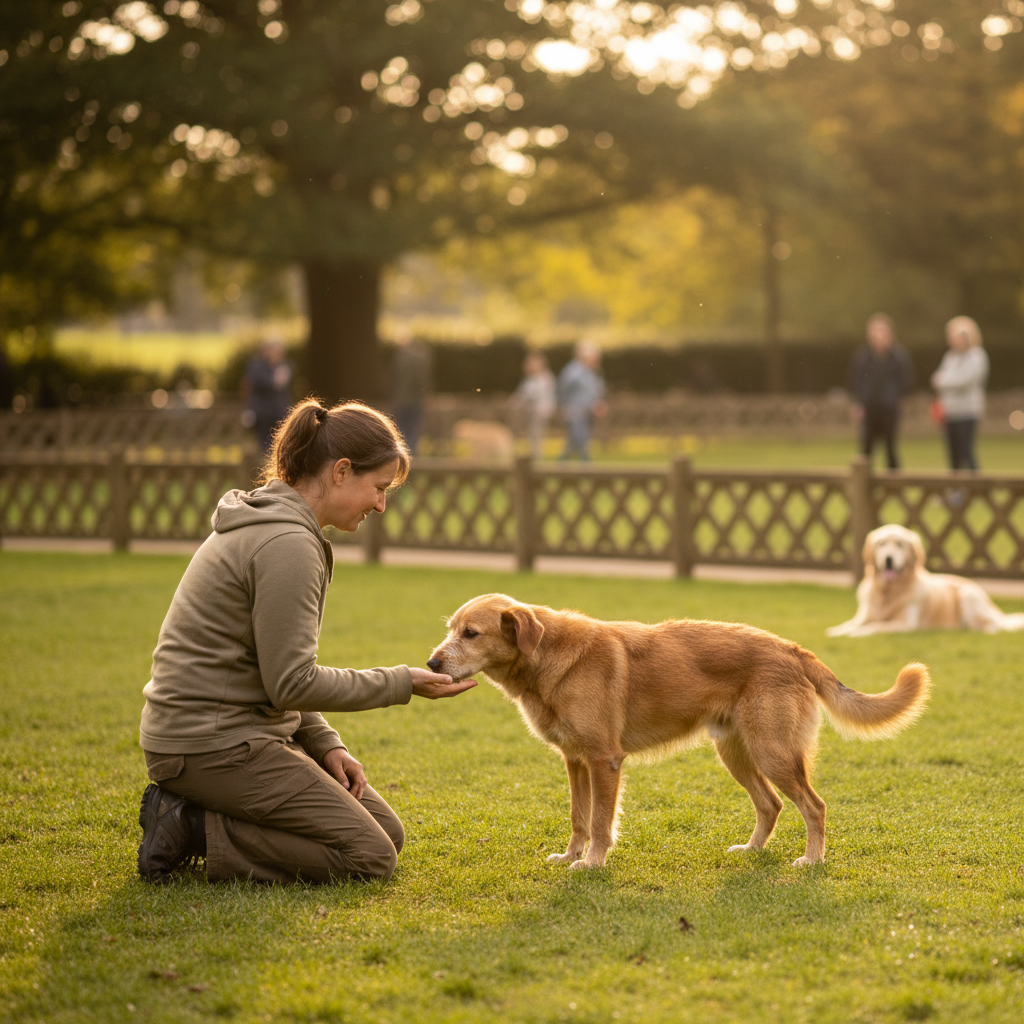
For the first few days or even weeks, avoid direct eye contact, looming over the dog, or forcing physical affection. In the canine world, direct eye contact and moving toward an individual can be perceived as aggressive. Instead, practice 'passive socialization.' Sit on the floor in the same room as the dog, but ignore them. Read a book or scroll through your phone while occasionally tossing high-value treats (like boiled chicken or cheese) in their direction without looking at them. This teaches the dog that your presence results in good things, and that you have no intention of invading their personal space.
-
Create a Rigid Daily Routine
Fearful dogs thrive on predictability. Anxiety often stems from not knowing what will happen next. Establish a strict schedule for feeding, walks, and potty breaks. Use the same doors for exits and the same routes for short walks. When a dog can predict the rhythm of their day, their cortisol levels begin to drop, allowing their brain to move out of 'survival mode' and into 'learning mode.' Predictability builds the first layer of trust between the dog and their new environment.
-
Utilize Choice-Based Counter-Conditioning
Once the dog is comfortable moving around the house, start introducing mild stimuli. If the dog is afraid of the brush, place the brush on the floor and put treats around it. Let the dog approach the object at their own pace. If they move toward it, reward them. If they move away, do not move the object closer. This 'choice-based' approach empowers the dog. You are changing their emotional response to the object from fear to 'this object predicts a snack,' which is the core of successful socialization.
-
Gradual Expansion and 'The Bubble' Method
Only after the dog is fully relaxed in the home should you begin socialization with outsiders or new environments. Use the concept of 'the bubble'—identify the distance at which your dog notices a stranger but doesn't react with fear. Stay at that distance and provide heavy rewards. Gradually, over many sessions, decrease that distance. Never allow strangers to rush up and pet the dog; instead, have friends ignore the dog and drop treats. This reinforces the idea that strangers are non-threatening providers of resources rather than unpredictable intruders.
Average rating: No ratings yet
Log in to rate how helpful this was.
Comments
-
Which common pet behavior would test your patience the most?
Poll · July 21, 2026 -
 Exotic Pets vs Traditional Pets: Which Is the Better Companion?
Versus · February 14, 2026 -
 Birds vs Reptiles: Which Pet Suits Your Lifestyle Better?
Versus · February 13, 2026 -
 Golden Retriever vs. Labrador Retriever: Choosing the Perfect Family Companion
Versus · February 11, 2026 -
 Cats VS Dogs
Versus · December 4, 2025